
Birthmark Treatment Center of Excellence
Birthmarks can appear as red, purple, blue, brown, or darkened areas on the skin, and each type requires careful evaluation before treatment begins.
At Chrysalis Skin & Scar in Scottsdale, AZ, our paramedical team provides clinically guided vascular birthmark removal for patients seeking a clearer understanding of their skin and a thoughtful path toward visible improvement.

Birthmark Types
Birthmark types can vary in color, depth, location, and underlying cause, making a clinical evaluation the first step in determining the best treatment approach. Like scars, birthmarks can affect multiple layers of tissue, involve blood vessel abnormalities, pigment changes, or alterations in collagen structure. Both can also have a significant emotional and psychological impact on an individual.
At Chrysalis Skin & Scar, treatment planning begins by identifying whether the concern is a port wine stain birthmark, port wine birthmark, café au lait spots, nevus of Ota, or another visible birthmark concern. This helps our providers determine the safest and most effective approach for your skin tone, birthmark type, and long-term goals.
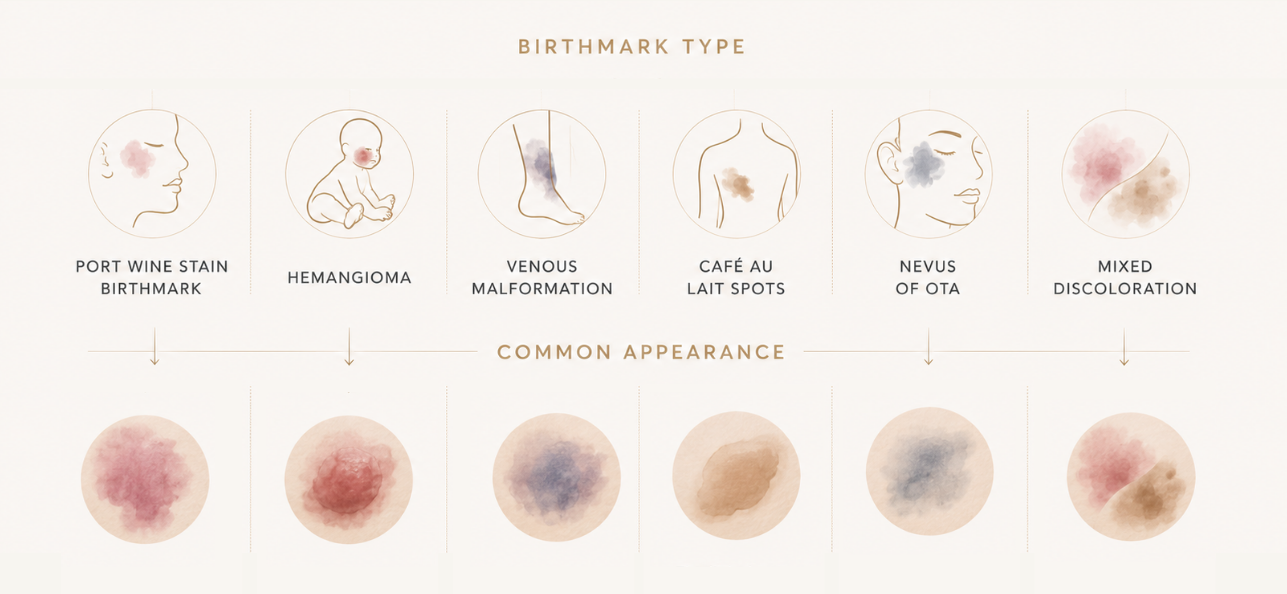
Common Birthmarks We Evaluate
Common Appearance
Pink, red, purple, or wine-colored mark that may darken over time.
Red or raised vascular marks that may appear early in life.
Blue, purple, or swollen looking area related to abnormal veins.
Flat light brown patches that may appear at birth or in childhood.
Blue, gray, brown, or slate colored pigmentation often near the eye, temple, forehead, or cheek.
Birthmarks with both vascular and pigment related changes.
Birthmark Type
Port wine stain birthmark
Hemangioma
Venous malformation
Café au lait spots
Nevus of Ota
Mixed discoloration
Understanding Vascular Birthmarks
Vascular Birthmark Removal
at Chrysalis Skin & Scar
A vascular birthmark develops when blood vessels beneath the skin form differently, creating a visible mark that may appear red, pink, purple, blue, or darker depending on the depth and type of vessel involvement. Some vascular birthmarks are present at birth, while others become more noticeable with time.
Port wine stain birthmarks, for example, may become darker or more textured over time. Other concerns, such as café-au-lait spots and nevus of Ota birthmarks, may involve pigment rather than blood vessels alone, which is why the right diagnosis is important before beginning vascular birthmark removal.
A vascular birthmark develops when blood vessels beneath the skin form differently, creating a visible mark that may appear red, pink, purple, blue, or darker depending on the depth and type of vessel involvement. Some vascular birthmarks are present at birth, while others become more noticeable with time.
Port wine stain birthmarks, for example, may become darker or more textured over time. Other concerns, such as café-au-lait spots and nevus of Ota birthmarks, may involve pigment rather than blood vessels alone, which is why the right diagnosis is important before beginning vascular birthmark removal.
Why Patients Choose Chrysalis Skin & Scar
Patients choose Chrysalis Skin & Scar for vascular birthmark treatment because the practice combines clinical expertise, advanced skin technology, and a thoughtful understanding of pigment, vascular discoloration, and tissue response.
As a paramedical clinic, Chrysalis approaches vascular birthmark removal with careful evaluation, patient education, and treatment planning based on the specific birthmark type.
Our team understands that concerns such as port wine birthmarks, café-au-lait spots, or nevus of Ota can affect your confidence and comfort with your skin. Patients in Scottsdale, AZ choose Chrysalis for care that feels precise, informed, and focused on meaningful improvement.
-
The best way to identify your vascular birthmark type is through a clinical skin evaluation. A provider will assess the color, depth, location, texture, and history of the mark to determine whether it appears vascular, pigment-based, or mixed. A port wine stain birthmark, café-au-lait spots, and a nevus of Ota can look very different and may require different treatment approaches. At Chrysalis Skin & Scar in Scottsdale, AZ, your consultation helps guide the safest next step.
-
Yes, a port wine stain birthmark can be treated with laser-based technology that targets visible vascular discoloration. A port wine birthmark often appears pink, red, or purple and may darken or thicken over time. Treatment is typically focused on softening the visible color and improving the appearance of the affected skin. Results vary, and several sessions may be recommended depending on the size, depth, and response of the birthmark.
-
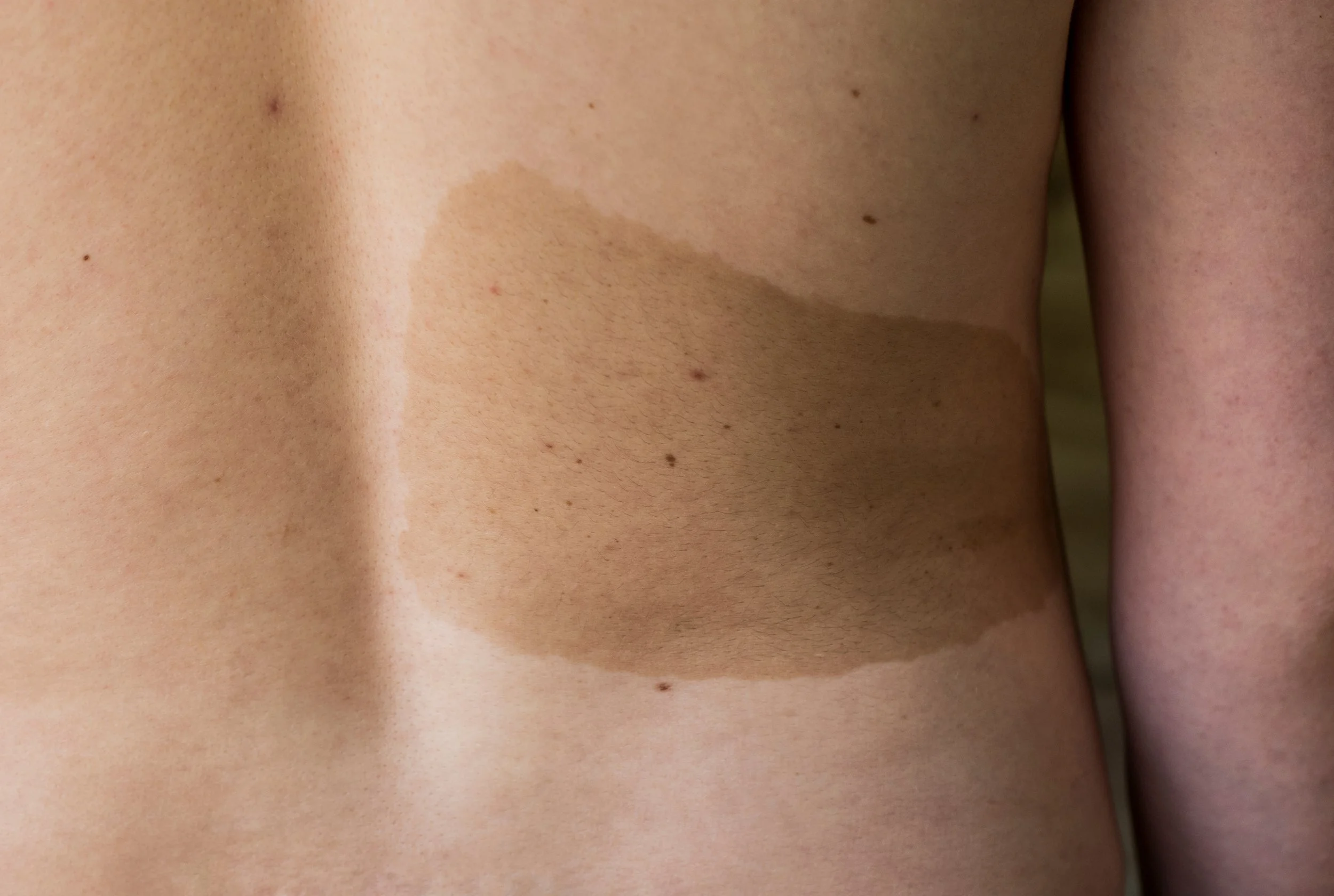
Yes, café-au-lait spots are considered a type of pigmented birthmark. They usually appear as flat, light brown patches and may be present at birth or develop during childhood. Patients often compare café au lait spots vs birthmark concerns because they look different from red or purple vascular birthmarks. Since café au lait spots are pigment-based, Chrysalis Skin & Scar evaluates the depth and pattern of pigment before discussing treatment options.
-
Café au lait spots are usually related to pigment, while vascular birthmarks are related to blood vessels beneath the skin. This means café-au-lait spots often appear light to medium brown, while a vascular birthmark may appear red, pink, purple, blue, or darker. The difference matters because pigment-based concerns and vascular concerns may respond to different types of treatment. A consultation helps determine the right category before vascular birthmark removal or pigment-focused treatment is considered.
-
Nevus of Ota removal may be possible for some patients, although treatment depends on the depth, location, color, and skin tone. A nevus of Ota birthmark often appears blue, gray, brown, or slate colored and is commonly seen near the eye, temple, forehead, or cheek. Because this pigmentation can sit deeper in the skin, improvement may take a series of treatments. Chrysalis Skin & Scar evaluates the area carefully before recommending a treatment plan.
-
Is vascular birthmark removal safe for different skin tones?
Vascular birthmark removal can be safe across different skin tones when the treatment is carefully selected and performed with clinical judgment. Skin tone plays an important role because pigment response and heat sensitivity can vary from patient to patient. Chrysalis Skin & Scar evaluates each birthmark and surrounding skin before treatment to reduce unnecessary risk. This is especially important for patients with darker pigment, mixed discoloration, or a history of post-treatment pigmentation changes.
-
The number of treatments needed depends on the vascular birthmark type, size, color, depth, location, and how your skin responds. A port wine stain birthmark may require a different treatment plan than café-au-lait spots or nevus of Ota. Some patients notice gradual softening of color, while deeper or more complex birthmarks may need a longer series. During your consultation, your provider will explain realistic expectations and the recommended treatment timeline.
-
You should schedule a consultation if your vascular birthmark has changed, become more visible, causes self-consciousness, or if you want to understand your treatment options. Early evaluation can help identify the birthmark type and determine whether vascular birthmark removal may be appropriate. Chrysalis Skin & Scar in Scottsdale, AZ, provides a clinical setting where patients can ask questions and receive clear guidance. The first step is understanding the mark before creating a treatment plan.